Alain Leroy Locke believed that Black artists, writers, and thinkers were not simply creating culture—they were shaping ideas about identity, freedom, and the future. As a philosopher and educator, he brought questions of aesthetics, culture, and self-determination into the center of Black intellectual life.
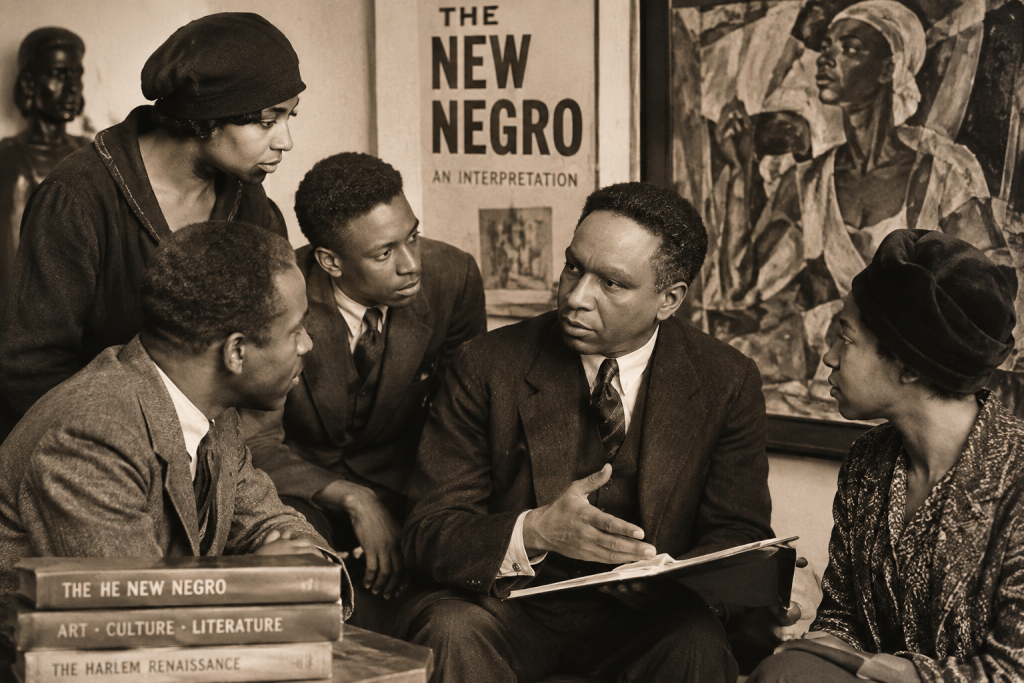
His influence reached far beyond the classroom. Through his writing, teaching, mentorship, and advocacy for Black artists, Locke helped give intellectual shape to the cultural movement that became known as the Harlem Renaissance.
Locke helped turn Black cultural expression into a powerful intellectualtradition.
A LIFE OF INTELLECTUAL AND CULTURAL INFLUENCE
From Philosophy to the Harlem Renaissance
1885
Born in Philadelphia
Alain Leroy Locke was born into a Black middle-class family in Philadelphia, where education and intellectual development were deeply valued.
1907
Becomes the First African American Rhodes Scholar
After graduating from Harvard, Locke became the first African American selected as a Rhodes Scholar and continued his studies at Oxford.
1912
Begins Teaching at Howard University
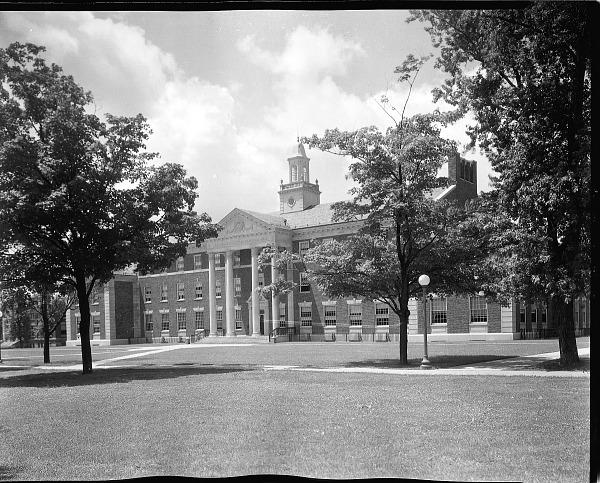
Locke joined Howard University, beginning a long academic career in philosophy, education, and the humanities.
1918
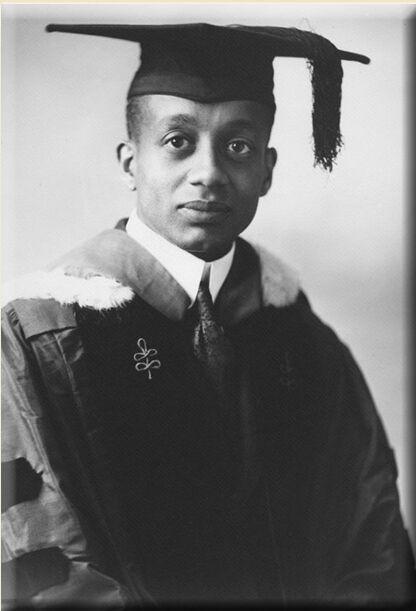
Earns His Harvard Ph.D.
Locke completed his doctorate in philosophy at Harvard, becoming one of the leading Black philosophers of his generation.
1925
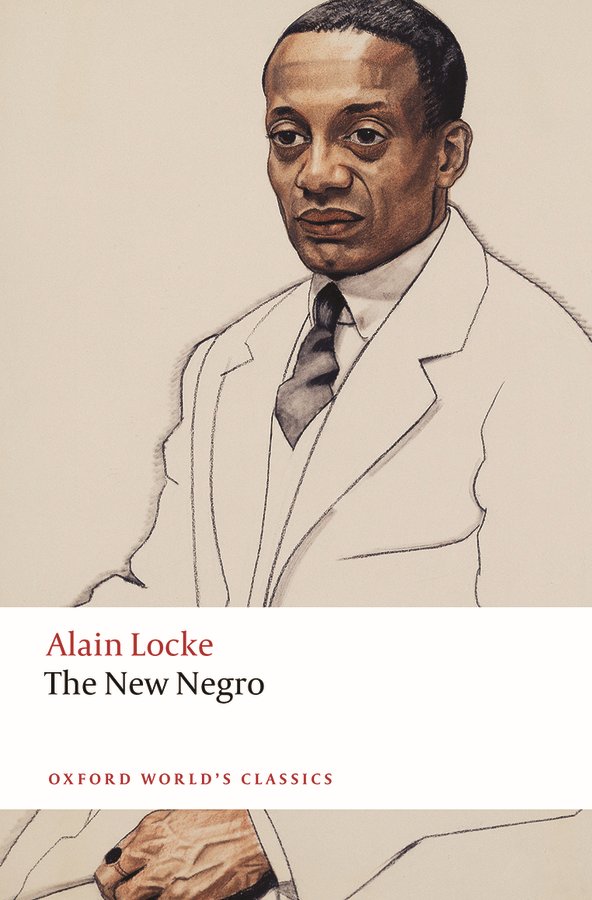
Publishes The New Negro
Locke edited and published The New Negro: An Interpretation, bringing together Black writers, artists, and intellectuals and helping define the cultural significance of the Harlem Renaissance.
1930s–1940s
Expands His Cultural Work
Locke continued writing and teaching about Black art and culture, advocating for Black artists and documenting their contributions to American cultural life.
1953
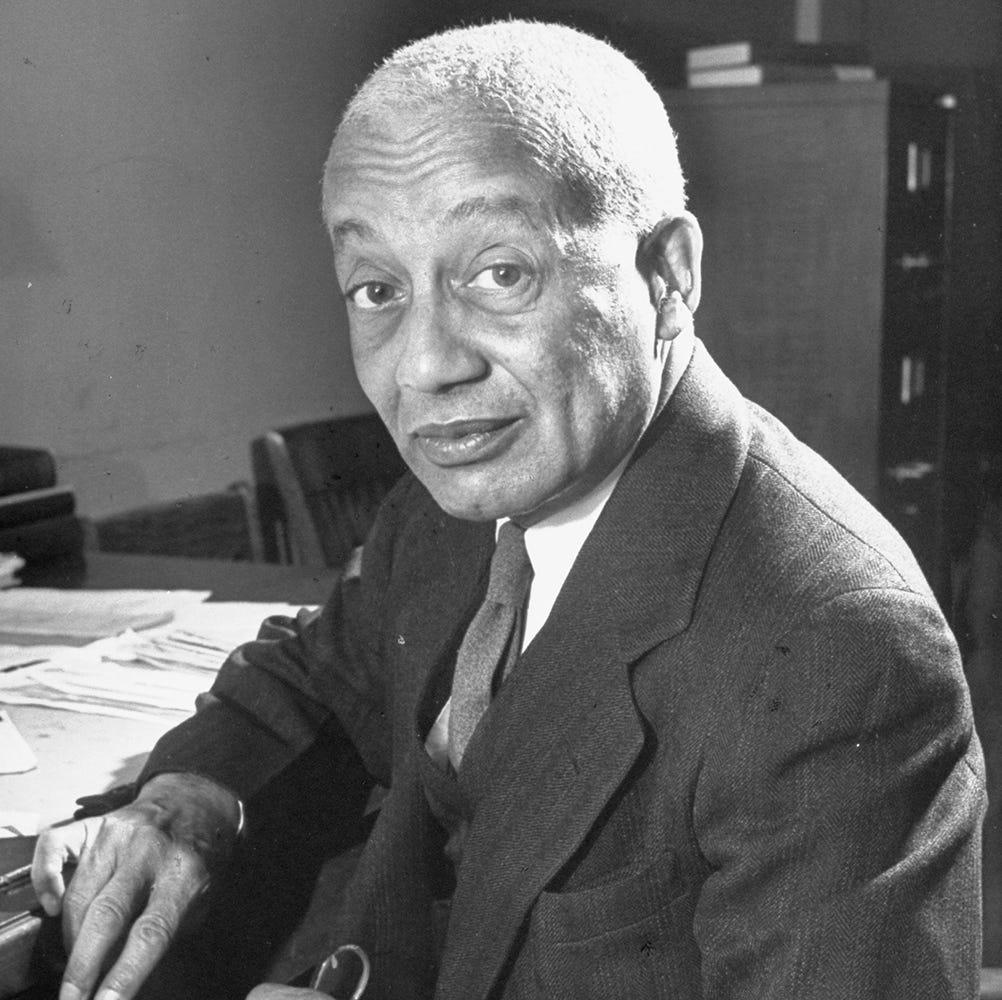
Retires from Howard University
After more than four decades of teaching and scholarship, Locke retired from Howard University.
1954
His Intellectual Legacy Continues
Locke died in New York on June 9, 1954. His work continued to influence scholarship on Black philosophy, aesthetics, literature, and cultural identity.
WHY HIS WORK MATTERS
He Helped Black Culture Claim Its Intellectual Place
Alain Leroy Locke challenged the idea that Black culture needed outside approval to have intellectual and artistic value. He believed Black artists and thinkers should have the freedom to define their own experiences, create their own cultural expressions, and contribute to the broader intellectual life of America.
Through his philosophy, teaching, writing, and advocacy for Black artists, Locke helped shift the conversation around Black identity and creativity. He recognized culture not simply as something to preserve, but as a way of thinking, questioning, creating, and imagining what could come next.
For Locke, cultural expression was not separate from intellectual life. It was part of how a people defined themselves.
EDUCATION & SCHOLARSHIP
Philosophy Became a Foundation for Cultural Change
Locke’s academic journey took him from Philadelphia to Harvard, Oxford, and eventually Howard University. He studied philosophy at a time when Black intellectual achievement was often constrained by the assumptions and institutions surrounding it.
His scholarship gave him a framework for examining questions of identity, values, aesthetics, and culture. At Howard University, he brought those ideas into the classroom while mentoring students and participating in the development of Black intellectual life.
Locke’s work demonstrated that philosophy was not removed from everyday life. Questions about beauty, identity, culture, and human values could help people understand themselves—and imagine new possibilities for their communities.
Education gave Locke the tools to question the world. He used those tools to help others imagine a different one.Lorem ipsum dolor sit amet, consectetur adipiscing elit. Ut elit tellus, luctus nec ullamcorper mattis, pulvinar dapibus leo.
PRESERVING THE CULTURAL RECORD
Making Black Art Part of the Record
Locke understood that culture could be lost when the people creating it were excluded from the institutions that documented and defined American history. He worked to challenge that exclusion by writing about Black artists, documenting their contributions, and advocating for the recognition of Black art and culture.
Through works such as Negro Art: Past and Present and The Negro in Art, Locke helped create a critical record of Black artistic achievement. His writing gave artists intellectual context while making the case that Black art belonged within the larger history of American culture.
His preservation work was not simply about looking backward. It helped establish a foundation through which future generations could study, understand, and build upon Black artistic and intellectual traditions.
“The artist must be true to his own experience.”
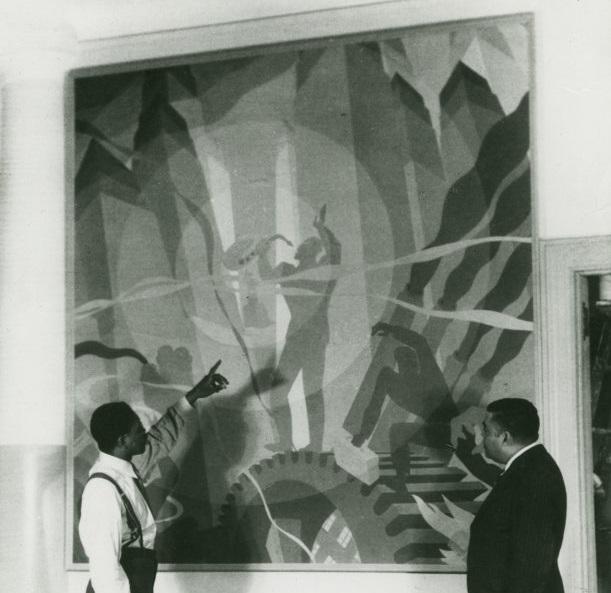
Black artists and their work became an essential part of the cultural and intellectual record Locke worked to document and expand.
LEGACY BUILDER
A Legacy That Changed How Black Culture Was Seen
Alain Leroy Locke did more than write about the Harlem Renaissance—he helped shape how its artists, writers, and ideas were understood. Through his philosophy, teaching, criticism, and advocacy, he challenged narrow definitions of Black intellectual and artistic life.
Locke helped establish Black culture as a subject worthy of serious philosophical and scholarly attention. He encouraged artists and thinkers to draw from their own experiences and traditions rather than seeking permission to define their cultural identity.
His influence extended beyond his own lifetime, contributing to the intellectual traditions that continue to shape conversations about Black art, identity, culture, and self-determination.
He didn't simply document a cultural movement. He helped change how Black creativity, identity, and intellectual life were understood.
Alain Leroy Locke’s landmark 1925 anthology helped define the intellectual and cultural significance of the Harlem Renaissance.
LOCKE’S VISION
The New Negro
Published in 1925 and edited by Alain Leroy Locke, The New Negro: An Interpretation brought together essays, poetry, fiction, and visual art that reflected the changing ways Black Americans were thinking about identity, culture, and artistic expression.
Locke used the collection to highlight a generation of Black writers and artists who were defining themselves on their own terms. Rather than presenting Black culture as something that needed outside approval, The New Negro placed Black creativity and intellectual life at the center of the cultural conversation.
The book became one of the defining intellectual works associated with the Harlem Renaissance—and a lasting example of Locke’s belief that cultural expression could help shape how a people understood themselves and their place in the world.
The New Negro” represented more than a cultural movement. It represented a new way of thinking about Black identity, creativity, and possibility.
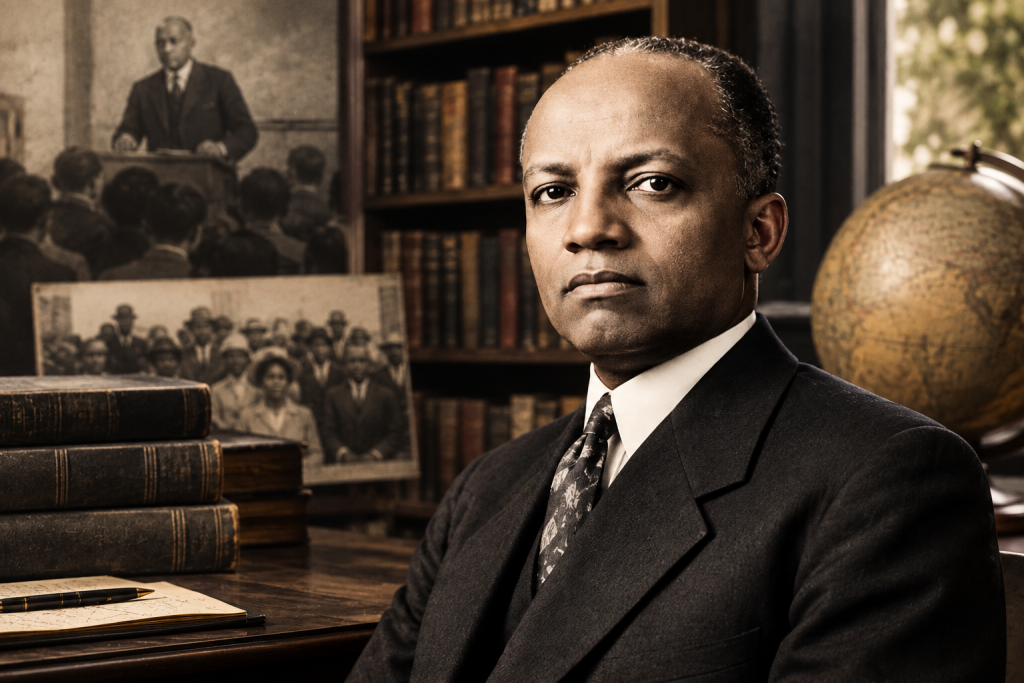
Alain Leroy Locke was part of a larger tradition of Black thinkers who challenged the limits placed on knowledge, education, and history. Explore the lives and ideas of Anna Julia Cooper and Carter G. Woodson —and discover how their work helped shape Black intellectual thought.
LEGACY BUILDER
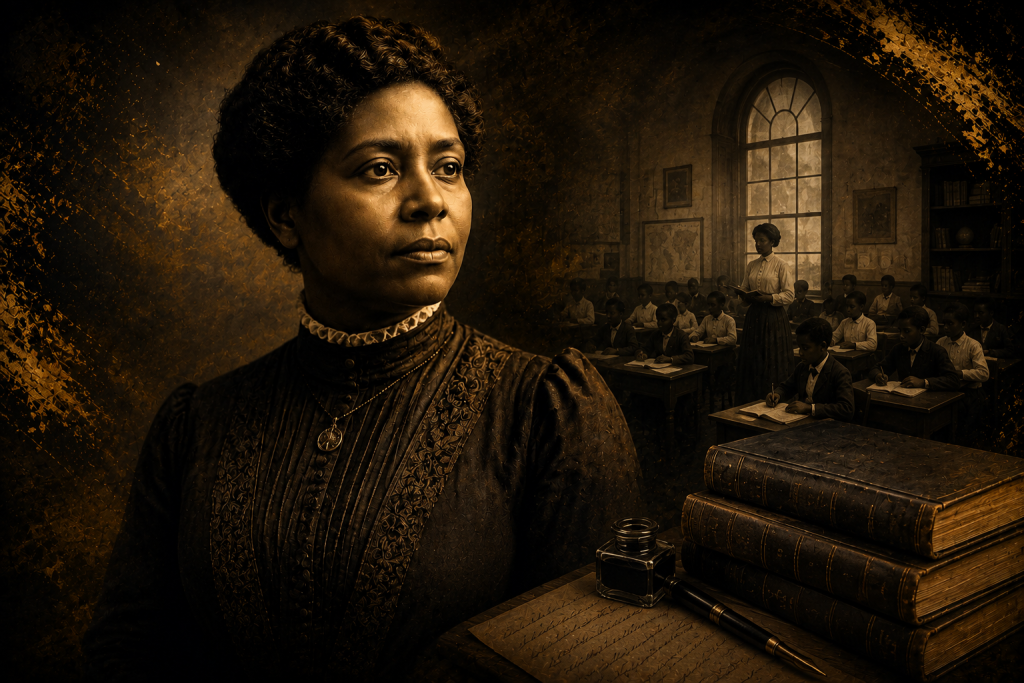
Anna Julia Cooper
Scholar, educator, and advocate whose work expanded the possibilities of education and intellectual life for generations to come.