
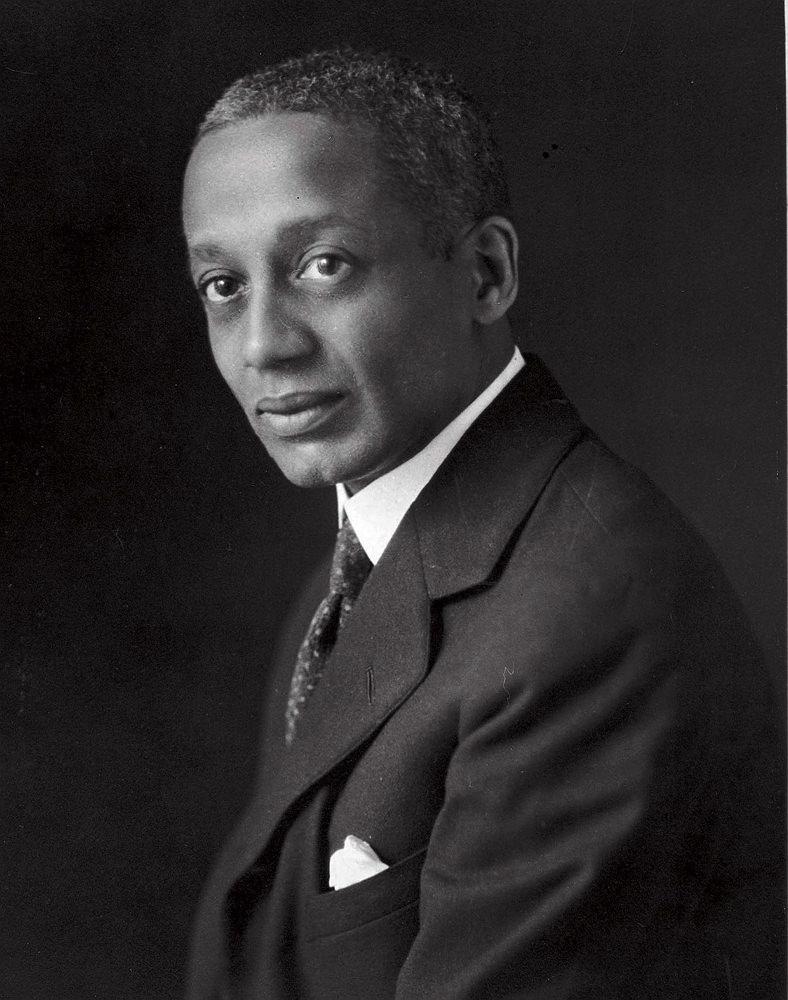
Alain Leroy Locke
Philosopher, educator, and cultural thinker who helped shape Black intellectual and artistic life during the Harlem Renaissance.
Category
The Story
Alain Leroy Locke was a philosopher, educator, and writer whose ideas helped redefine how Black identity, culture, and artistic expression were understood. As the first African American Rhodes Scholar, he brought philosophy and cultural criticism into conversation with the emerging artistic and intellectual movement of the Harlem Renaissance.
Quick Facts
Born
Died
Known For
Life & Legacy Timeline
1885 — Early Life in Philadelphia
September 13, 1885 — Alain Leroy Locke is born in Philadelphia, Pennsylvania, to Pliny Ishmael Locke, a lawyer, and Mary Hawkins Locke, a teacher. He grows up in Philadelphia’s established Black community, where education and intellectual achievement are strongly valued.
1904 — Enters Harvard
After graduating from Philadelphia’s Central High School and School of Pedagogy, Locke enters Harvard University. He studies philosophy under prominent scholars including Josiah Royce, George Herbert Palmer, Ralph Barton Perry, and Hugo Münsterberg.
1907 — Becomes the First Black Rhodes Scholar
Locke graduates from Harvard with an A.B. and is selected as the first African American Rhodes Scholar. He travels to England to study at Oxford’s Hertford College. His experience abroad exposes him to new ideas about race, culture, imperialism, and cosmopolitanism.
1910–1911 — Studies in Europe
After Oxford, Locke studies philosophy at the University of Berlin, encountering European philosophical traditions that would influence his developing ideas about values, culture, and race.
1912 — Begins His Career at Howard
Locke joins the faculty of Howard University, beginning what would become a more than four-decade teaching career. He teaches English, philosophy, and education and begins developing his ideas about race relations and Black intellectual life.
1915 — Engages the Study of Race
Locke gives a series of lectures at Howard’s NAACP chapter on the scientific study of race and interracial relations. His work increasingly connects philosophy with the social and cultural questions shaping Black life in America.
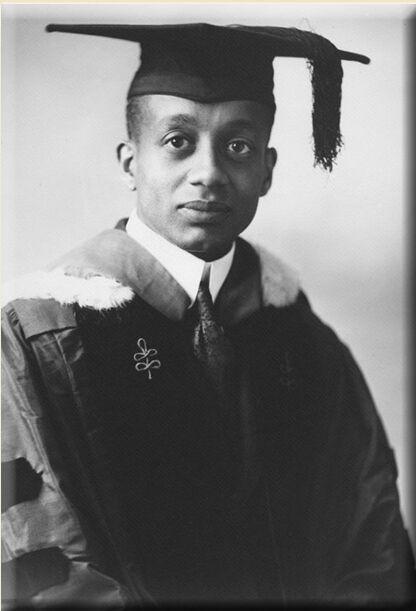
1918 — Earns His Harvard Ph.D.
Locke receives his Ph.D. in philosophy from Harvard after completing his dissertation, “The Problem of Classification in Theory of Value.” He returns to Howard as a full professor of philosophy.
1924–1925 — Helps Shape the Harlem Renaissance
Locke becomes a central intellectual force in the emerging Harlem Renaissance. In 1924 he edits the influential Harlem: Mecca of the New Negro issue of Survey Graphic. He expands that work into The New Negro: An Interpretation, published in 1925, bringing together Black poetry, fiction, essays, art, and cultural commentary.
1928 — Returns to Howard
After being dismissed from Howard in 1925 following disputes involving faculty pay equity, Locke returns to the university in 1928 after Mordecai W. Johnson becomes Howard’s first African American president. He continues teaching and developing his work on philosophy, race, culture, and aesthetics.
1930s–1940s — Expands Black Cultural Scholarship
Locke continues writing and editing on Black art and culture, including Negro Art: Past and Present (1936) and The Negro in Art (1940). In 1941, he organizes American Negro Art, an exhibition of African American artists in New York. He also contributes to efforts promoting Black cultural education through the Bronze Booklet series.
1953 — Retires from Howard
After more than four decades of teaching, Locke retires from Howard University and moves to New York. His academic career had helped establish philosophy and cultural studies as important parts of Black intellectual life at Howard.
1954 — Death
June 9, 1954 — Alain Leroy Locke dies in New York at age 68. His influence continues through his philosophical writings, cultural criticism, teaching, and his role in shaping the intellectual foundations of the Harlem Renaissance.
Legacy
A Quote to Remember
“The Negro mind reaches out to a larger world.”
- Alain Leroy Locke
Why This Matters
Sources & Further Reading
Sources
- Harvard — Alain Locke Gallery of African & African American Art — Biography, timeline, photographs, and further reading.
- Smithsonian National Museum of African American History and Culture — Alain Locke — Biography and historical context.
- Stanford Encyclopedia of Philosophy — Alain LeRoy Locke — Detailed treatment of Locke’s philosophy, career, and intellectual contributions.
- Howard University — Alain Locke Papers — Archival collection containing correspondence, writings, photographs, and materials documenting Locke’s work.
Further Reading
- Leonard Harris, The Philosophy of Alain Locke: Harlem Renaissance and Beyond (1989).
- Jeffrey C. Stewart, ed., The Critical Temper of Alain Locke: A Selection of His Essays on Art and Culture (1983).
- Leonard Harris, ed., The Critical Pragmatism of Alain Locke (1999).
- Russell J. Linneman, Alain Locke: Reflections on a Modern Renaissance Man (1982).
- Alain Locke, The New Negro: An Interpretation (1925).
- Alain Locke, Negro Art: Past and Present (1936).
Continue Exploring
Discover more stories of Black history, courage, and resilience.
There are more stories waiting to be discovered. Explore the people, places, movements, and moments that have shaped Black history and continue to influence our world today.