The Historian Who Refused to Let Black History Disappear
At a time when Black history was largely excluded from American textbooks, universities, and public memory, Carter G. Woodson understood that what was left out of the record could shape how generations understood themselves.
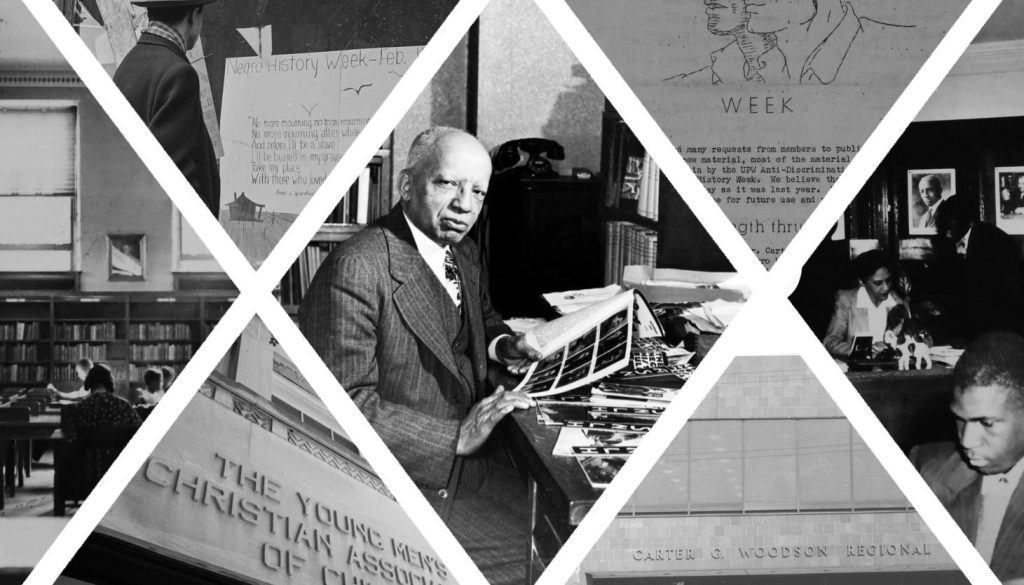
Born to formerly enslaved parents in Virginia, Woodson became a historian, educator, author, and institution builder. He dedicated his life to researching, documenting, and teaching Black history—and to creating the institutions necessary to ensure that this work would continue.
His legacy reaches far beyond the annual observance of Black History Month. Woodson helped establish Black history as a field of study and built a foundation for generations of scholars, educators, and communities to continue telling the story on their own terms.
WHY HE MATTERS
History Is More Than What We Remember
Carter G. Woodson understood that history shapes how people see themselves and how societies understand who belongs in the story.
At a time when Black history was routinely excluded or distorted in American education and scholarship, Woodson worked to create the institutions, scholarship, and traditions necessary to document Black life and preserve it for future generations.
EDUCATION
Teaching What Was Missing
He believed Black history belonged in classrooms and worked to make the study of Black life and achievement part of education.
INSTITUTION BUILDING
Creating a Historical Record
Woodson founded institutions and publications that gave Black scholars a place to research, publish, and preserve Black history on its own terms.
SCHOLARSHIP
Documenting Black History
Woodson dedicated his scholarship to researching and documenting Black history at a time when it was largely excluded from mainstream historical study.
LEGACY
A Tradition That Continues
Negro History Week helped establish a tradition of intentional study that grew into Black History Month and continues to shape how Black history is taught and remembered.
CARTER’S STORY
Building a Record That Could Not Be Erased
Carter G. Woodson understood that preserving history required more than remembering important people and events. It required creating a record—and creating institutions capable of protecting that record.
His own path shaped that mission. Born to formerly enslaved parents, Woodson worked as a coal miner before pursuing an education. He became a teacher, earned degrees from Berea College and the University of Chicago, and in 1912 became the second African American to earn a Ph.D. from Harvard University after W. E. B. Du Bois.
But Woodson did not stop with his own academic achievements. In 1915, he founded the Association for the Study of Negro Life and History. He later established The Journal of Negro History and, in 1926, launched Negro History Week.
Through scholarship, publishing, and institution building, Woodson created spaces where Black history could be researched, documented, taught, and preserved. His work helped transform the question from whether Black history belonged in the record to how that history would be recorded and carried forward.
A LIFE OF SCHOLARSHIP & PURPOSE
He Built the Institutions That Preserved the Story
1875
Born in Virginia
Born in New Canton, Virginia, to formerly enslaved parents James Henry and Eliza Riddle Woodson.
1895
Begins Teaching
After completing his early education, Woodson began teaching in West Virginia, beginning a lifelong commitment to education.
1903
Graduates from Berea College
Woodson earned his bachelor’s degree from Berea College in Kentucky.
1908
Earns a Master's Degree
He earned a master’s degree in history from the University of Chicago.
1912
Earns His Ph.D. from Harvard
Woodson earned his doctorate in history from Harvard University, becoming the second African American to receive a Ph.D. from Harvard after W. E. B. Du Bois.
1915
Founds ASNLH
Woodson established the Association for the Study of Negro Life and History, creating an institution dedicated to researching and preserving Black history.
1916
Launches The Journal of Negro History
He founded the journal to provide a scholarly platform for research and writing about Black history.
1926
Establishes Negro History Week
Woodson launched Negro History Week to encourage the study and teaching of Black history.
1950
Dies in Washington, D.C.
Woodson died on April 3, leaving behind institutions, publications, and a scholarly tradition that continued his work.
EDUCATION & SCHOLARSHIP
Education Was the Foundation of His Work
Woodson understood that education was not simply about earning degrees. It was a means of understanding history, challenging exclusion, and creating opportunities for Black people to shape their own intellectual future.
His own educational journey took him from working in the coal mines of West Virginia to Berea College, the University of Chicago, and Harvard University, where he earned a doctorate in history in 1912.
But Woodson saw education as something that extended beyond the classroom. He believed that knowledge of Black history could strengthen communities and challenge the distorted narratives that had shaped American education.
Through teaching, scholarship, and publishing, he worked to make Black history part of the intellectual record—and to ensure that future generations would have the knowledge to continue the work.
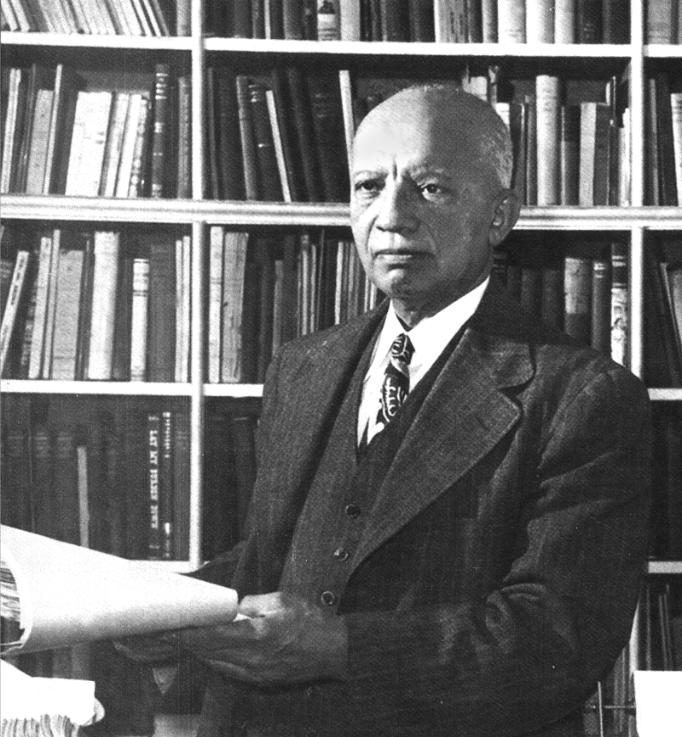
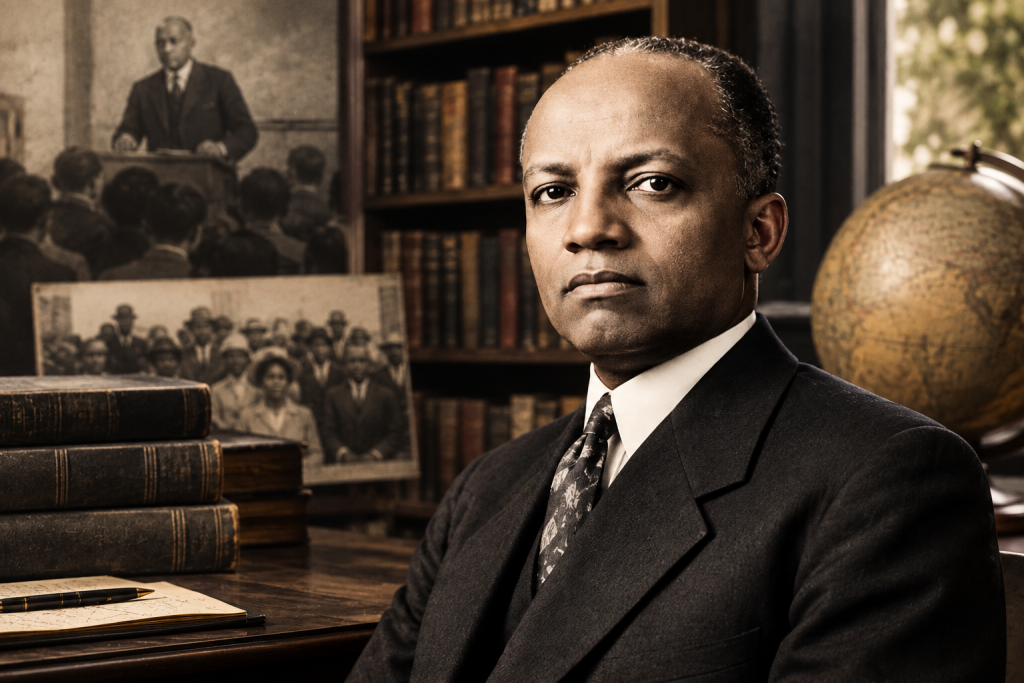
Carter G. Woodson surrounded by the books, scholarship, and historical record that shaped his lifelong commitment to Black history and education.
Through research, publishing, and preservation, Carter G. Woodson helped establish Black history as a field of serious study.
PRESERVING THE RECORD
Preserving Black History
Woodson understood that history could be lost when Black lives, achievements, and ideas were left undocumented or excluded from the historical record. He dedicated his life to changing that.
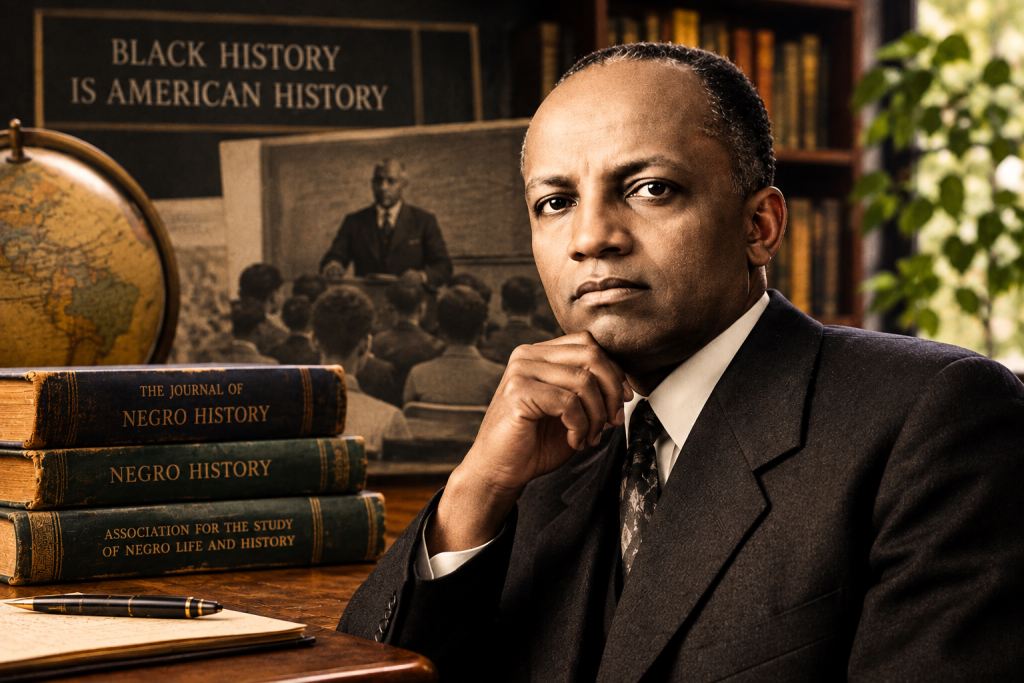
In 1915, he founded the Association for the Study of Negro Life and History, creating an institution dedicated to researching and preserving Black history. He later established the Journal of Negro History, providing a scholarly platform for documenting the experiences and contributions of Black people.
His work helped transform Black history from something too often overlooked into a field worthy of serious study, preservation, and teaching.
“If you want to understand today, look at yesterday.”
LEGACY BUILDER
A Legacy That Changed the Record
Carter G. Woodson did more than study history—he built the institutions and practices that helped ensure Black history would be researched, recorded, taught, and remembered.
Through his scholarship, publications, and the organizations he established, Woodson created a foundation that extended far beyond his own lifetime. His work opened doors for generations of scholars, educators, and students to examine Black history as an essential part of the American story.
His legacy lives not only in what he wrote, but in the generations who continue the work of preserving and expanding the historical record.
He didn't simply challenge the historical record. He built the institutions and scholarship that helped change who was remembered, how history was studied, and what future generations could know.
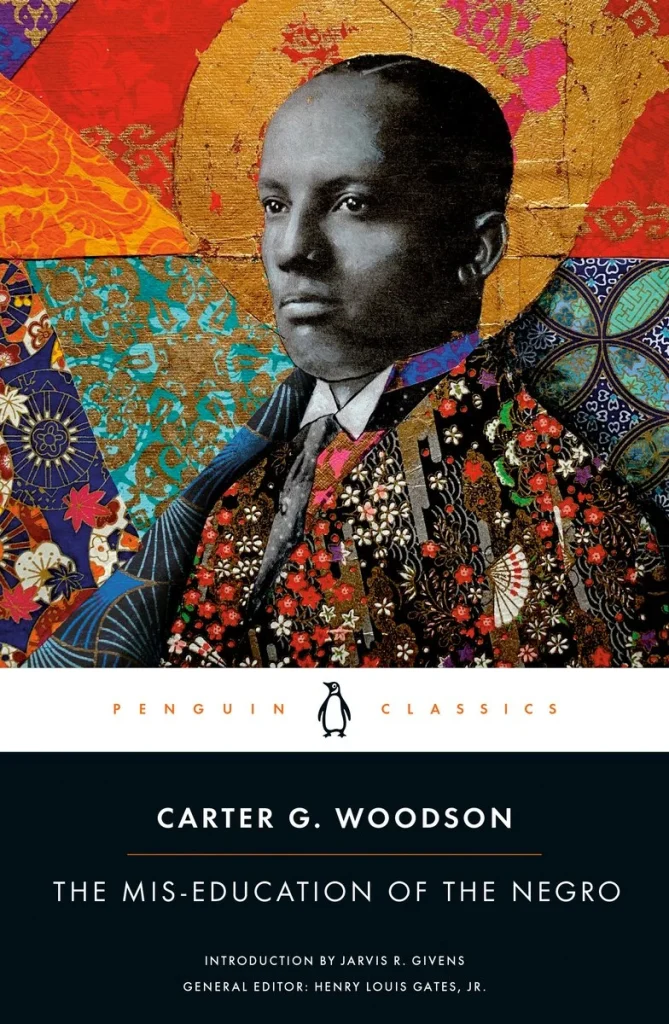
Carter G. Woodson’s landmark work examining the impact of education on Black identity, history, and self-understanding.
WOODSON’S WORDS
The Mis-Education of the Negro
Published in 1933, The Mis-Education of the Negro examined how an education disconnected from Black history, identity, and lived experience could shape how Black people understood themselves and their place in society.
Woodson challenged educators and readers to reconsider what was being taught, who shaped the curriculum, and whose knowledge was being left out. His argument remains closely connected to the work he spent his life advancing: education should not erase history—it should help people understand it.
Woodson believed education should help us understand who we are—not teach us to forget.
Carter G. Woodson was part of a larger tradition of Black thinkers who challenged the limits placed on knowledge, education, and history. Explore the lives and ideas of Anna Julia Cooper and Alain Leroy Locke—and discover how their work helped shape Black intellectual thought.
LEGACY BUILDER
Anna Julia Cooper
Scholar, educator, and advocate whose work expanded the possibilities of education and intellectual life for generations to come.